Sunday, January 21, 2007

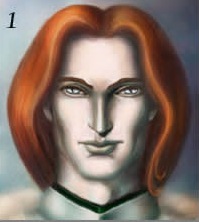
Feanor and Maedhros - My favourite Silmarillion characters

Who is my favourite Tolkien character? Silmarillion is rich with tragic characters, but whose tale moved me the most? I find it a bit difficult to choose one from among them. There are two candidates primarily - Feanor and his son, Maedhros.

I like Feanor because of his artistic skill and, most importantly, his arrogance. I have even devised a new phrase - 'Feanorian arrogance' which I consider synonymous with 'enlightened arrogance' (sounds oxymoronic, I know). He had reason to be arrogant. He was far too skilled and gifted than others. I like such anti-heroes, such as Darth Vader of Star Wars. Such characters have a mysterious, unfathomable element in their personalities.

Some regard Feanor as nothing more than a mad-man. But think like this: Feanor's rebellion was obviously part of Iluvatar's plans for Ea. If it hadn't been for him, the Light of the Two Trees would have been lost for ever. If it hadn't been for him, the Noldor wouldn't have returned to Middle Earth, and Men wouldn't have received the gifts of art and music from them. If it hadn't been for his actions, the three beautiful unions of the mortal and immortal would never have happened. If it hadn't been for him, his grandson Celebrimbor would not have created the three great Elven rings of the "Lord of the Rings".

In short, without Feanor there is no Silmarillion and Lord of the Rings! It is the fruits of Feanor's madness that we see throughout the First, Second and Third ages in Middle Earth. He is undoubtedly the greatest Elf in the legendarium on account of his skill and influence in shaping the history of Middle Earth.

The other contender is Feanor's eldest son, Maedhros the tall. His tale is one of honesty, nobility, bravery, resilience and yet, replete with fallibility and the inevitable tragedies that arise from it. He is my image of a true male, a true son, a man of word. He remained steadfast to the commitments he made to his dying father. He must never have satisfied his father with his soft nature and warm-relationships with the Houses of Fingolfin and Finarfin. His inability to please his father must have weighed upon him for all his life. He probably decided to redress this when his dying father commanded him to assume the leadership of the House and continue the battle. He remained true to his word till the end, even when his death seemed certain due to it. He knew that the battle was hopeless. He knew he was on the wrong side and that he was doing things which he shouldn't be doing. But the weight of the Oath and his commitment to his dead father over-ruled everything else.

His story is also one of resilience. He had to endure horrific tortures at the hands of Morgoth. He was hung on his right hand for many, many days from the sheer face of a cliff. His spirit nearly broke down when Fingon found no way of rescuing him. But after his rescue and recuperation, he displayed a surprising strength of will. He learned to fight with his left hand instead of the maimed right hand. It is said that he wielded his sword with this left hand with even greater power and ferocity than he ever did with his right hand.

Despite all this, he ultimately failed in his mission. He had to commit sins and inflict cruelty on others, though his heart was bleeding all along. But he never went back on his words. He never failed his father till death. Eonwe knew his fate when he allowed Maedhros and Maglor to escape with the Silmarils. Eonwe, and all the Valar for that matter, were powerless to prevent what fate had in store for Maedhros, the former High-King of Noldor in Middle-Earth who was also the only one to relinquish the title in favour of another.

Labels:

Why Silmarillion is special to me

I have often thought how my life would have turned out had I not discovered Tolkien. Life would have become so empty in spite of the left-wing passion that I had. Since I started reading Tolkien's works, there has not been even a day, nay not even an hour, when I had not thought about the events in the legendarium.. It has become so much part of myself. If you take the Communist and Tolkienist out of me, you are left with a useless biological specimen that is as good as dead.

But the most amazing fact is that my discovery of Tolkien was a work of chance. Before the year 2001, I had never heard of Tolkien, Lord of the Rings or Silmarillion. This was how it happened. I was reading through the articles in the 'Young World' supplement of 'The Hindu' newspaper. An article on Peter Jackson's upcoming movie "The Lord of the Rings: The Fellowship of the Ring" caught my eye. I don't remember what that article said. But I was spellbound by the picture they published with the article. It was the snapshot of Frodo Baggins enjoying a breath of fresh air at Rivendell against the backdrop of majestic cliffs and waterfalls. A few weeks after that, while I was surfing the channel on TV, I saw a program on the movie. It showed the sequences of the huge statues at Argonath and Enya's haunting music. Too beautiful! Too enchanting! I did not know anything regarding the movie, the story or the author. But I wanted to see it. I went to see it at the local theater when it was released. I was hooked, literally. I wanted to know the rest of the story. I couldn't wait for the next installments. I asked my brother to bring the book when he comes from abroad. I got it on the eve of my first year Engineering exams. As a few of the exams got postponed, there was a gap of about a month. I read the whole story at a stretch forgetting my studies. My! What a story it was! When I reached the part of Frodo battling Gollum on the Mouths of Doom, I was literally shaking with excitement and anticipation. And the really beautiful, tearful ending.. conveying the idea that ends of great stories are not exactly happy..

That was the beginning.. Once I had read Lord of the Rings a couple of times more, I felt confident to take the dive into the unknown.. The Myths and Legends of Middle-Earth. Tales that Hobbits and Men knew as legends, and Elves knew as their ancient history. The incomparable, eternally beautiful "Silmarillion".

Again I requested my brother. He brought it when he came. It was the paperback edition with Ted Nasmith's painting depicting the birth of Elves at Cuivinen as the cover. Before I got the book, I read numerous reviews of it in the Net. Nearly all of them branded the book as too boring, too hard to read, useful only for a Tolkien scholar. But it was nothing of that sort to me. I was swept off my feet by the first chapter : "The Music of the Ainur". I knew that this was what I wanted. I tried to visualize the event: The eternal darkness, Iluvatar as a mighty source of light, creation of the Ainur, their music reverberating through the empty cosmos. Tolkien's legendarium is no work of fantasy. It is mythology. It is cosmology. How many works of fantasy have such fantastic depth and philosophy? It is true that Tolkien got his inspirations from numerous other sources.. But who in the history of humanity have ever created a piece of art without some kind of inspiration from outside? Which world religion has created a uniquely original philosophy? Everything borrowed concepts from everything else. It is the tale of such sharing that is what we call history. Tokien's tale had the one God - the one true cosmic spirit. It had the pantheon of gods that God created to rule the Earth. It had the tale of fall of Men, and most importantly, that of the nearly "perfect" Elves. It had the tale of Atlantis, the Beowulf, the Karavela, the Sigurd, Oedipus Rex and numerous others. But Tolkien's achievement was that he was able to creatively combine his inspirations and create a beautiful piece of art.

After reading Silmarillion, Lord of the Rings suddenly appears to have a whole new meaning. To truly understand the Lord of the Rings, one has to view it through the glasses of Silmarillion. I had a totally new experience when I watched the Lord of the Rings after reading Silmaillion. For instance, when I see Hugo Weaving as Elrond, I think like this: "He is the son of Earendil who sought the pardon of the Valar to save Elves and Men. He was captured and raised by Maglor and Maedhros. Yes, he has seen them with his very own eyes!". Or Cate Blanchett as Galadriel, who was there over 7000 years ago, in the square on Tirion when Feanor delivered his thundering call for revenge. She has seen the Golden and Silver Trees in full bloom in Valinor. She had witnessed their death. She has seen the majesty of the High-Elven Kings in Middle-Earth before their fall. She has seen the unsurpassed beauty of Luthien. Or Sir Ian McKellen as Gandalf, who was created before the creation of the World. Even now, when I see people watching Lord of the Rings movies (who, in all probabilities, have never heard of Silmarillion), I muse to myself : "Mere mortals!! They are trying to scratching the tip of the iceberg." I do not know how many people have felt like this.. but once I read the Silmarillion, world suddenly came to be divided into two in my eyes : between those who have read the book and those who haven't! I felt something like a superiority complex.. the world was never again the same.

What makes Silmarillion so special?.. at least to me? I have pondered over this many times. I think it is the very mind of the artistic genius that reveals to us through a creation of unparalleled beauty. Its beauty lies in the epic tragedy inflicted by fate upon many good-natured, yet less than perfect characters. I never knew that tragedy could have so much beauty. Silmarillion is also unique among mythical tales in that the focal point of the tale is not Men, but Elves. Accepted, most mythical tales have some or the other kinds of celestial beings, angels or fairies. But the focus is almost always on humans. Silmarillion has many tragic human characters, but they pale in comparison to the tragedies inflicted upon near-perfect immortal beings due to their own imperfection. Elves are, by body and soul, the most beautiful creations of God. They gave humans the gift of art and music. Yet how they committed mistakes and inflicted cruelty on themselves and others is what Simarillion is all about.

Also, amazing is the fact that the tale is not told in the usual good-versus-evil fashion. We have a Satan like figure. But he is no Satan. Yes, he was the most gifted of the gods who was corrupted by craving for power. He sought the power to bring into life his creations. But his rebellion was, ultimately, God's own creation. The events of Silmarillion and Lord of the Rings were all part of his Grand Scheme that He alone could fathom. Throughout the tale, there is the vision of an grand End where the perceived Good and Evil blends into one pure whole that signifies the end of creation. Morgoth is a mere actor in the drama unfolding in the World, drama that has been conceived from the beginning till the end by Iluvatar, and Iluvatar alone. The simple idea which I perceive in this story is that Evil is essential since Good assumes its true beauty only in its presence. It is impossible to gauge the beauty of the Light without the accompanying darkness. Just as Darkness gives fullness to Light, Evil gives fullness to Good. In that sense, Morgoth is Iluvatar's deputy, the chief executioner of God's plans, though he himself is unaware of it.

It is this literally heart-rendering combination of art, beauty and philosophy that makes Silmarillion special to me.

Labels:

Saturday, November 04, 2006

A Silmarillion movie series?

That would be the dream of a lot (if not every) of the Tolkien fans, like me.. To see Manwe, Varda, Morgoth, Sauron, Feanor, Maedhros, Fingolfin, Beren, Turin, Tuor and Luthien (who have so far existed only in our minds or in the paintings of Ted Nasmith, John Howe, Allen Lee and numerous other artists) come to life in screen would be simply fantastic!!

It would be nothing like the Lord of the Rings trilogy.. Those who have read Silmarillion knows that it far exeeds LotR in epic grandeur.. glorious Gods, mighty High-Elven Kings and deeds of unsurpassing heroism. An epic tale unfolding over a period of 600 years..

These are precisely the reasons why a Silmarillion movie series may never come into being, sadly... :-(

To do justice to the masterpiece of Tolkien, The Silmarillion in screen should be spanning over atleast 8 movies, in my opinion. Here's what I propose:

  1. "The Silmarillion : The Legend of Feanor" :- It tells the tale from the creation of the Ainur by Iluvatar, Melkor's rebellion, creation of the World, awakening of Elves, chaining of Melkor, departure of Elves to Valinor, Melkor's release, Feanor's rebellion, slaying of the Two Trees, Feanor's Oath, departure of Noldor to Middle Earth, the Kinslaying, prophecy of Mandos, burning of the Teleri ships and the death of Amras, and finally, ends with death of Feanor at the hands of Balrogs. This film would require a lot of Cate Blanchett-style narrative as seen in the LotR.
  2. "The Silmarillion : The Return of Maedhros" :- This film would cover the capture of Maedhros, the arrival of the people of Fingolfin and Finarfin, the rescue of Maedhros by Fingon from Thangorodrim by amputation of his right arm, Maedhros's repentence and ceding of High-Kingship to Fingolfin, the recuperation of Maedhros, how he painstakingly learned to wield his sword with his left arm (with even greater strength!), and finally, how he led the Noldor to victory against marauding Orc armies, beginning the long Siege of Angband. This film would require a lot of fictional content, but it is intended to showcase the horrors Maedhros had to undergo in Angband, his bravery and resolve.
  3. "The Silmarillion : The Fall of Fingolfin" :- This film would cover a lot about how the Elves rebuilt and reached their zenith of power, during the Seige of Angband. This could possibly include the construction of Nargorothrond and Gondolin. It ends with the Breaking of the Seige at Battle of Sudden Flame where Angrod and Aegnor were slain and the Noldor were routed. Then, finally, we have the heroic duel between Fingolfin, the High King of Noldor-in-Exile, and Morgoth resulting in the death of Fingolfin.
  4. "The Silmarillion : The Tale of Luthien and Beren" :- This film will begin with the heroism of Barahir at the Battle of Sudden Flame and covers his life in exile, betrayal of their band, death of Barahir, escape of his son Beren and his meeting with Luthien Tinuviel. Then the film would cover their adventures at the Tower of Sirion and Angband, death of Beren and Luthien and their return as mortals. I'm not sure whether their final death could be covered here as it overlaps with events in other films.
  5. "The Silmarillion : The Battle of Unnumbered Tears" :- This film will cover the formation of the Union of Maedhros and the subsequent Battle of Unnumbered Tears resulting in the routing of the Elven Kingdoms in Middle-Earth and the death of Fingon.
  6. "The Silmarillion : The Children of Hurin" :- This film would cover Hurin's capture at the Battle of Unnumbered tears, his rescue of Turgon, his capture by Morgoth, the subsequent Curse of Morgoth upon him and his children. Then the film shows the tragic tale of Turin and Nienor, destruction of Nargorothrond, slaying of Glaurung, and the death of Turin and Nienor.
  7. "The Silmarillion : The Downfall of Gondolin and Doriath" :- This tale could cover the release of Hurin, the tale of Nauglafring, death of Thingol and departure of Melian, death of Hurin and Morwen, rise of Dior as the King of Doriath, death of Beren and Luthien and the Silmaril coming into the possession of Dior. The film could cover in parallel, the events in Gondolin, i.e tale of Aredhel, Eol and Maeglin, snapshot of Tuor's life, his arrival in Gondolin, his marriage with Idril, capture and betrayal of Maeglin. The final destruction of Doriath and Gondolin could be shown in parallel. One possibly touching sequence I have contrived will be Celegorm, Caranthir and Curufin fighting Dior and getting slain by him. Finally, Maglor fights and kills Dior in wrath, after which he breaks down and repents his deed. The film will end with the touching union of the refugees from the two former Hidden realms at the mouths of Sirion. This seems to be too much crowded for a single movie. Maybe some kind of omissions or alterations will be needed here.
  8. "The Silmarillion : The War of Wrath" :- This film tells of the departure of Tuor and Idril, union of Earendil and Elwing, Earendil's final voyage in search of Valinor, the final assault of Feanorians for the Silmaril. This film would offer even more touching seens. Feanorians are faced with the task of fighting their fellow Noldorin Elves (Turgon's people) who have vowed to fight till death defending the people and family of their beloved leader Earendil. Eventually, even many among the Feanorians abstain from battle and some even join the other side against this unrighteous battle. But Maglor, Maedhros and Amrod, contrained by their Oath, fights despite revulsion, and Amrod falls to a Noldorin sword. Elwing jumps into the Sea, and saved by Ulmo, finds Earendil (who was distraught as he was unable to find the way to Blessed Realm) as a swan, bringing the Silmaril. Earendil learns from her of the incidents at Sirion, and grieves for the fate of their twin-children (a parallel shot shows their captivity by Maglor, who nevertheless took pity on them and raise them like his children). Still they resolve to go to the West, seeking emancipation of Men and Elves from Morgoth. This time they finds the Land of the Gods with the aid of their Silmaril. Earendil and Elwing speaks before them on behalf of the two kindreds. The War of Wrath follows. This will be the mightiest battle in the whole of the movie series, as it is the battle between Gods. Beleriand is destroyed, Morgoth overthrown and remaining two Silmarils captured. Here again, the plight of Maglor and Maedhros comes into focus, as they slay the guards to capture the Silmarils. Though they are captured, Eonwe, aware of their cruel, unavoidable fate lets them escape with the Silmarils. But Maglor and Maedhros, to their grief discovers that they have lost their claim to it (as it burns their hands), due to their sins committed in its name. Maedhros jumps into a fiery chasm with his Silmaril and Maglor throws his into the sea. The film could end with the distraught face of Maglor beside the sea, and a Cate Blanchett-style narration of the departure of Noldor, how Galadriel stayed back, how the Numenor was raised from the Sea, how Elros became the first High-King of Numenor and Elrond created Rivendell. The film would also show a final shot of Sauron, as he plots his rise in the absence of Morgoth.

The mighty and historic Silmarillion movie series ends here. It could be taken over 4 years with 2 films released each year.

Another alternative narrative structure could be Elrond narrating this to Frodo at Rivendell, before he departs to the unknown with his Ring. Here we could add the situation where Elrond remembers the kindness of Maglor to him and his twin-brother Elros, and how they were taught and raised by Maglor and Maedhros (A touching link between the Silmarillion and LotR, and between the first age and the third age). This structure could have a touching end with Elrond saying farewell to Frodo saying: "Remember those who came before, and did unparalleled heroism against all odds - Beren, Turin, Tuor."

But such a movie franchise like this is highly unlikely to materialize, due to the level of risks involved. Peter Jackson could do a good job (I think he did well with the LotR considering the pressures and risks he was in. Any other director would have been far worse.).

If such a movie series is ever made, I have another suggestion. The sound tracks and music should be done by Enya. She has that "Elven" beauty in her songs and voice, as seen in FotR's "May it Be". It would be truly breathtaking.

There is no doubt that a such a mammoth venture will far surpass anything attempted in cinematic history. It would be a gigantic venture that would require the utmost artistic creativity, sense of beauty and ground-breaking special effects to create Valinor and the High-Elven kingdoms on screen.

Oh... How I wish to actually see the glory of the High-Elves on screen!!!

Sadly, this dream of mine will probably never come to fruition.

Labels: